
Packing for Mount Kilimanjaro is one of the most important and most frequently mismanaged aspects of climb preparation. Get it right and you will move efficiently through five ecological zones, stay warm and dry in conditions ranging from tropical humidity to arctic cold, and arrive at the summit with every physical and logistical advantage at your disposal. Get it wrong — arrive with cotton base layers, inadequate gloves, or boots that were never broken in — and even the best route selection and the most experienced guiding team cannot fully compensate for the discomfort and risk that poor gear creates at altitude.
Kilimanjaro’s unique challenge is the extraordinary range of conditions a trekker encounters within a single expedition. On day one in the rainforest, temperatures may reach 25°C with high humidity and afternoon rain. By day five in the alpine desert, days are cool and nights are cold enough to freeze water in uninsulated bottles. On summit night, temperatures at Uhuru Peak can plunge to -20°C or below, with wind chill making the felt temperature even more extreme. No single set of clothing manages all of these conditions — the answer is a carefully considered layering system that allows rapid adaptation as elevation and temperature change throughout each day.
This definitive packing list covers every category of gear and clothing a Kilimanjaro trekker needs, organized by function and accompanied by guidance on what to prioritize, what can be left at home, and the principles that should guide every packing decision for this remarkable mountain.
The Layering System: The Foundation of Everything
Before examining specific items, understanding the layering principle that underpins all effective Kilimanjaro clothing decisions is essential. Three functional layers work together to manage moisture, retain warmth, and protect against wind and rain — and each must perform its role without compromising the others.
The base layer sits against the skin and its primary function is moisture management — wicking perspiration away from the body to prevent the clammy, heat-robbing dampness that soaks cotton clothing and rapidly causes dangerous chill at altitude. Merino wool and synthetic fabrics such as polyester are the materials of choice. Cotton in any form — t-shirts, cotton underwear, denim — is entirely unsuitable for Kilimanjaro and should be left at home without exception. The phrase “cotton kills” is well-known in mountaineering circles for good reason: wet cotton loses almost all insulating value and takes a very long time to dry, creating a genuine hypothermia risk at high altitude.
The mid layer provides insulation — trapping warm air against the body to retain heat in cold conditions. Fleece jackets and down or synthetic insulated jackets are the primary mid-layer options. A quality down jacket, compressible and extremely lightweight for the warmth it delivers, is one of the single most valuable items on the entire Kilimanjaro packing list. At high camp and on summit night, a warm, lofty down jacket worn beneath a waterproof shell transforms the experience of the cold significantly.
The outer layer provides protection against wind, rain, and snow. A waterproof and windproof hardshell jacket and matching hardshell trousers are essential. The outer layer must be both genuinely waterproof — not merely water-resistant — and breathable, allowing moisture vapor from perspiration to escape outward while preventing rain and wind from penetrating inward.
Clothing: The Complete List
Upper Body
Two to three moisture-wicking base layer shirts provide adequate rotation across a seven-to-nine-day trek when combined with appropriate airing and drying at camp. One long-sleeve and one short-sleeve base layer is the minimum recommended combination. A mid-weight fleece jacket adds warmth in the mornings and evenings at lower camps and serves as the primary insulating layer before transitioning to down at higher elevations. A high-quality down jacket — rated for temperatures of at least -10°C — is essential from approximately day four onward and absolutely critical for summit night. A hardshell waterproof jacket completes the upper body system, worn over all other layers in rain, wind, and during the summit push.
Lower Body
Convertible trekking trousers — which zip off at the knee to convert to shorts — provide the versatility needed for the warm lower mountain and the cooler upper zones in a single garment. Two pairs are recommended to allow for rotation. Thermal base layer leggings provide essential insulation at high camp and during summit night, worn beneath the trekking trousers. Hardshell waterproof trousers are worn over all other lower layers in wet conditions and throughout the summit push.
Hands and Head
The extremities — hands, head, and face — are the most vulnerable parts of the body to cold on summit night and deserve specific, quality attention in packing. A warm fleece or wool hat and a balaclava or neck gaiter that can be pulled up to cover the face provide essential head and face protection. Liner gloves — thin, moisture-wicking inner gloves — worn beneath heavyweight insulated waterproof outer gloves or mittens create a two-layer hand protection system that is critical at the summit. Fingers become extremely painful and potentially dangerously cold on summit night in inadequate gloves; this is not an area where budget compromises are advisable.
Socks and Footwear
Four to five pairs of high-quality merino wool or synthetic trekking socks are the minimum. Wool socks regulate temperature, manage moisture, and resist odor far more effectively than cotton equivalents. Gaiters — short ankle gaiters for the lower mountain and taller gaiters for the upper alpine desert and summit zone — keep debris, dust, and potential snow out of boot tops.
Footwear: The Most Important Item on the List
Hiking boots are the single most important item any Kilimanjaro trekker will pack, and the choice deserves careful thought and, critically, adequate breaking-in time before departure. A boot that feels comfortable in a shop but has never been worn on multi-day hikes will cause blisters, hot spots, and genuine physical suffering within two days on the mountain.
Mid- to heavyweight waterproof hiking boots with ankle support are the appropriate choice for Kilimanjaro — not trail running shoes, not lightweight day-hiking shoes, and certainly not casual walking boots. The terrain ranges from slippery forest roots and muddy moorland paths to loose volcanic scree on the upper mountain, and the boots must provide adequate grip, waterproofing, ankle stability, and insulation across all of it.
Begin wearing your chosen boots on training hikes at least three months before departure. Hike in them on progressively longer and more challenging terrain until any pressure points have been resolved and the boots feel entirely natural. Bringing a second pair of lightweight camp shoes or sandals provides welcome foot relief at camp in the evenings.
The Daypack and Duffel Bag
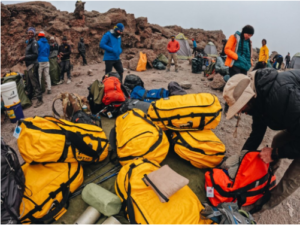
On a Kilimanjaro trek, trekkers carry a daypack for daily use while porters carry a large duffel bag containing camping equipment, clothing not needed during the day, and the majority of personal gear to each new campsite. Understanding this division shapes how packing should be organized.
The daypack — carried personally every hiking day — should hold: two to three liters of water (in bottles or a hydration bladder), snacks and energy food for the day, a camera, sunscreen and lip balm, a personal first aid kit, any medication, a rain cover for the pack itself, and the layers not currently being worn. A capacity of 25 to 35 liters is ideal — large enough for the day’s essentials without becoming heavy enough to add meaningful fatigue.
The duffel bag carries sleeping bag, spare clothing layers, toiletries, and any non-essential items. Most operators specify a maximum duffel weight of 15 kilograms to protect porter welfare and comply with KPAP guidelines. Packing within this limit is a responsibility that every trekker should take seriously.
Sleeping Bag and Sleep System
A quality sleeping bag rated to at least -10°C is non-negotiable for Kilimanjaro. At high camp — Barafu or Kibo, depending on route — overnight temperatures regularly fall to -15°C or below, and a sleeping bag that is marginally adequate at sea-level cold becomes dangerously insufficient at altitude where the body’s ability to generate heat is already compromised by hypoxia. Many experienced operators recommend a bag rated to -15°C or colder as the safe standard.
A sleeping bag liner — a thin silk or fleece inner layer — adds several degrees of effective warmth to any sleeping bag and is a lightweight, compact, and inexpensive addition that pays significant dividends at high camp. Sleeping pad insulation from the tent floor completes the sleep system; most operators provide pads, but confirming this with your specific operator before departure is advisable.
Technical and Safety Equipment
Trekking poles are strongly recommended for all Kilimanjaro trekkers regardless of fitness or experience level. They reduce knee impact on descents — which can be extremely long and steep on routes like Machame — provide additional stability on loose scree, and offer meaningful support on summit night when coordination is reduced by altitude. Collapsible poles that pack easily into a duffel are the practical choice.
Headlamp with fresh batteries and at least one full set of spares is essential. Summit night begins in complete darkness and headlamps are used for multiple hours during the summit push. A headlamp that fails or dims on summit night is a serious safety concern; testing the lamp thoroughly before departure and carrying spare batteries in a warm inner pocket to prevent cold-induced battery failure are both important precautions.
Sunglasses providing genuine UV protection — category 3 or 4 lenses — are essential above the forest zone. Solar radiation at altitude is significantly more intense than at sea level, and the combination of direct sunlight and reflected glare from snow and ice on the upper mountain creates a genuine risk of photokeratitis (snow blindness) in inadequate eyewear.
Water bottles and purification — carry at least two one-liter bottles or a hydration bladder with a minimum two-liter capacity. Water is available for refilling at each campsite on most routes, but must be treated. Iodine tablets, a SteriPen UV purifier, or a quality filter are all effective options. In the cold of the upper mountain, insulated bottle sleeves prevent water from freezing overnight.
Toiletries, Health, and Personal Items
Biodegradable soap, shampoo, and hand sanitizer are appropriate choices for Kilimanjaro given the mountain’s status as a sensitive protected ecosystem. Baby wipes are invaluable for daily freshening when shower access is not available. Sunscreen with SPF 50 or higher and a quality UV-protective lip balm are essential from day one — sunburn and severely chapped lips are common and entirely preventable complaints on the mountain.
A personal first aid kit should include blister treatment supplies (moleskin, blister plasters, and a sterile needle), pain relievers (ibuprofen and paracetamol), rehydration salts, antihistamines, and any personal prescription medications including altitude medication if prescribed. Anti-nausea medication is worth including for trekkers with altitude-sensitive digestion.
A personal pulse oximeter — small, lightweight, and inexpensive — allows individual monitoring of blood oxygen saturation between the formal health checks conducted by guides. Watching your own SpO2 trend over consecutive days is both practically informative and psychologically grounding during the acclimatization phase of the climb.
Key Takeaways
- The layering system — moisture-wicking base layer, insulating mid layer, and waterproof outer shell — is the foundational principle of all Kilimanjaro clothing and must be implemented for both upper and lower body.
- Cotton in any form is entirely unsuitable for Kilimanjaro and should be left at home — wet cotton loses insulating value and creates genuine hypothermia risk at altitude.
- A down jacket rated to at least -10°C is one of the single most important items on the entire packing list and is essential from high camp onward and throughout summit night.
- Hiking boots must be waterproof, ankle-supporting, and fully broken in before departure — new or inadequately broken-in boots will cause blisters and foot problems that are entirely preventable.
- Summit night hand and head protection — quality insulated waterproof gloves worn over liner gloves, a warm hat, and a balaclava — deserve premium gear investment; extremities are disproportionately vulnerable to dangerous cold at 5,895 meters.
- A sleeping bag rated to at least -10°C is non-negotiable; high camp temperatures regularly fall below this threshold and a marginally warm bag fails critically when the body’s heat generation is already compromised by altitude.
- Trekking poles significantly reduce knee strain on long descents, provide stability on loose scree, and offer essential support during the reduced coordination conditions of summit night.
- A headlamp with fresh batteries and full spares is a non-negotiable safety item — summit night runs for multiple hours in complete darkness, and cold temperatures accelerate battery drain.
- The duffel bag weight limit of 15 kilograms is not merely a logistical guideline — it is a responsibility to the porter team whose welfare and physical safety depend on every trekker packing within the specified limit.
- A personal pulse oximeter is a small, inexpensive, and genuinely valuable tool for individual health monitoring between formal guide-administered checks throughout the acclimatization phase.
Frequently Asked Questions (Q&A)
Q: Can I rent gear in Moshi instead of bringing everything from home?
A: Yes, gear rental is widely available in Moshi and provides a practical solution for items that are expensive to purchase, difficult to travel with, or needed only for a single expedition. Sleeping bags, trekking poles, gaiters, and duffel bags are among the most commonly rented items. However, rental quality varies significantly between providers, and certain items — boots, base layers, gloves, and any gear that sits directly against the skin — are strongly recommended to be personal items brought from home for hygiene, fit, and reliability reasons. If renting any gear, inspect it carefully before the trek begins and test all closures, zippers, and fastenings.
Q: How should I manage clothing weight given the 15-kilogram duffel limit?
A: Focus on technical performance fabrics that deliver maximum function at minimum weight. Merino wool base layers, compressible down jackets, and lightweight hardshell jackets are specifically designed to perform well while packing small. Avoid bringing duplicate items that serve the same function — one good fleece performs as well as two average ones while consuming half the weight and space. Plan clothing rotation carefully: two base layer shirts, two pairs of trekking trousers, and a well-planned layering system allow a full eight or nine days on the mountain within the duffel weight limit when combined appropriately.
Q: Do I need crampons or an ice axe for Kilimanjaro?
A: Under normal conditions on all seven standard routes, crampons and ice axes are not required for Kilimanjaro. The mountain is a non-technical trek rather than a technical mountaineering ascent. In unusual conditions — particularly after significant snowfall on the upper mountain — light traction devices such as microspikes may be useful and are occasionally recommended by guides for the final approach to the crater rim. Your operator will advise if conditions on your specific departure date warrant additional traction equipment. Standard hiking boots with good lug soles are adequate for the vast majority of Kilimanjaro ascents throughout the year.
Q: Should I bring a camera or rely on my phone for photography?
A: Both have merit and both have limitations on Kilimanjaro. Smartphone cameras are capable of producing excellent images and the convenience of a single device is significant. However, cold temperatures at high altitude — particularly on summit night — drain smartphone batteries extremely rapidly, and a phone that dies before reaching Uhuru Peak is a genuine disappointment. Carrying a dedicated camera with spare batteries, stored in a warm inner pocket when not in use, ensures reliable photography at the moments that matter most. Regardless of the camera choice, carry a portable power bank to maintain battery levels throughout the trek.
Q: How do I prevent water from freezing on summit night?
A: Several strategies work in combination. Insulated bottle sleeves or neoprene covers significantly slow heat loss from water bottles. Carrying water bottles inside the pack rather than in outer pockets reduces exposure to wind and cold air. Hydration bladder hoses are particularly vulnerable to freezing and should be blown clear after each sip to prevent ice forming in the tube. Starting summit night with water that has been heated or at least brought to room temperature — rather than cold water from a mountain stream — extends the time before freezing becomes an issue. In extremely cold conditions, some trekkers carry one bottle inside an insulated layer close to the body.
Q: What personal medications should I pack beyond a basic first aid kit?
A: Beyond the standard first aid kit essentials, consider including: Acetazolamide (Diamox) if prescribed by your physician for altitude sickness prevention; loperamide for traveler’s diarrhea; antacids for altitude-related digestive discomfort; throat lozenges for the dry air at altitude that commonly causes throat irritation; and any personal prescription medications in quantities sufficient for the full trip duration plus a buffer for delays. All medications should be stored in a waterproof container within your daypack rather than the duffel, ensuring access regardless of where the porter team is on the trail.
Q: Is a four-season tent provided by operators, or should I bring my own sleeping system?
A: Reputable Kilimanjaro operators provide all camping equipment including tents, dining tents, and sleeping pads as part of the tour package. Trekkers are responsible for their personal sleeping bag and sleeping bag liner. The quality of operator-provided tents varies — from basic two-person dome tents with budget operators to high-quality four-season expedition tents with premium providers — and is worth confirming before booking. You should never need to provide your own tent for a standard guided Kilimanjaro climb, but always carry your sleeping bag and liner as personal items rather than relying on operator provision for these.
Conclusion
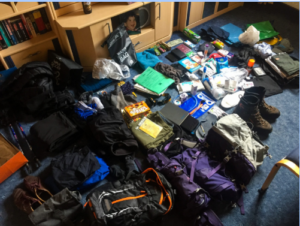
Packing well for Kilimanjaro is not about having the most expensive gear or the most comprehensive equipment list. It is about understanding the specific demands of a mountain that takes you through five climatic zones in a single week and preparing with the precision and thoughtfulness that such an extraordinary range of conditions demands. The right base layers, the right boots, the right insulation, the right protection for summit night — these are not luxuries. They are the practical foundations upon which a safe, comfortable, and ultimately successful summit attempt is built.
Every item on a Kilimanjaro packing list represents a decision about comfort, safety, and performance at altitude. The trekker who arrives having made those decisions carefully and thoroughly — who has broken in their boots, tested their headlamp, confirmed their sleeping bag’s temperature rating, and packed within the porter weight limit — begins their climb with a meaningful advantage over one who has treated packing as an afterthought.
For those planning their Kilimanjaro expedition and seeking expert guidance on gear, preparation, and every practical detail of the journey ahead, Tanzania Migration Safaris & Travel is here to help. Our team brings deep knowledge of what the mountain demands, what gear genuinely performs at altitude, and how to ensure every trekker we support arrives at the trailhead fully prepared — equipped, informed, and ready to reach Uhuru Peak.
