
White coral sands. Turquoise waters that shift from jade to sapphire with the tide. A spice-scented breeze carrying centuries of history. Zanzibar is not just a beach destination — it is a sensory experience unlike any other on Earth.
Introduction
There are beach destinations. And then there is Zanzibar. While the world has no shortage of beautiful coastlines, very few places manage to layer the kind of natural perfection — warm, clear Indian Ocean water, powdery white sand, fringing coral reefs alive with marine colour — with the depth of history, culture, and atmosphere that Zanzibar delivers as effortlessly as a morning tide. A Zanzibar beach holiday offers something genuinely rare in modern travel: a destination where paradise is not manufactured for tourists, but simply exists, rooted in centuries of living tradition and natural abundance.
The Zanzibar Archipelago sits approximately 35 kilometres off the coast of mainland Tanzania in the warm western Indian Ocean. The main island, Unguja — known simply as Zanzibar — is roughly 90 kilometres long and 30 kilometres wide, small enough to feel intimate, large enough to hold extraordinary variety. Alongside it, the smaller island of Pemba to the north offers one of the world’s finest scuba diving environments, while the remote Mafia Island to the south remains one of East Africa’s most pristine and least-visited marine destinations.
What distinguishes a Zanzibar beach holiday from other Indian Ocean escapes is the island’s soul. Zanzibar has been a crossroads of civilisations for over a thousand years — Arab traders, Persian merchants, Portuguese explorers, Omani sultans, Indian spice dealers, and British colonists have all left their mark on this small island, creating a cultural and architectural tapestry of extraordinary richness. When you are not floating in the warm shallows or watching a painted dhow sail across a sunset horizon, you are walking streets that Marco Polo might have recognised, tasting spices that once made this island one of the most commercially powerful places in the world, and engaging with a people whose warmth and dignity make every interaction memorable.
This guide covers everything you need to plan the perfect Zanzibar beach holiday — from the best beaches and water activities to the ideal time to visit, cultural experiences not to miss, and practical advice that makes the difference between a pleasant trip and an unforgettable one.
The Beaches of Zanzibar: Finding Your Perfect Shore
Zanzibar’s coastline is varied enough that different beaches suit fundamentally different types of travellers. Understanding the distinctions between them is one of the most important steps in planning your holiday.
Nungwi — The North’s Crown Jewel
Nungwi sits at Zanzibar’s northern tip and is widely regarded as the island’s finest all-round beach destination. Its key advantage over much of the rest of the island is tidal: while many of Zanzibar’s east coast beaches experience dramatic tidal withdrawals that leave hundreds of metres of exposed seabed at low tide — making swimming impossible for hours at a time — Nungwi’s position at the northern point means it retains swimmable water at almost all hours of the day.
The beach itself is breathtaking — a wide arc of brilliant white sand fringed with traditional fishing dhows and casuarina trees, with water that transitions from pale jade near the shore to deep sapphire further out. Nungwi has developed a lively beach village atmosphere, with excellent restaurants, beach bars, dive schools, sunset dhow cruises, and a range of accommodation from intimate boutique hotels to larger resort properties. It is Zanzibar’s most social beach — ideal for travellers who want beautiful scenery combined with activity and energy.
Kendwa — Intimacy and Sunset Perfection
Just a few kilometres south of Nungwi, Kendwa is a smaller, quieter beach that shares the same tidal advantages as its northern neighbour while offering a more relaxed and intimate atmosphere. The beach curves gently around a calm bay, and the sunsets here — with the sun dropping directly into the Indian Ocean at the end of the north coast — are among the most spectacular anywhere in Zanzibar. Kendwa is ideal for couples and travellers seeking tranquillity without complete isolation.
Paje — The East Coast’s Kite Capital
On Zanzibar’s eastern coast, Paje offers a fundamentally different beach experience. The east coast faces the open Indian Ocean and catches consistent trade winds that have made Paje one of the world’s premier kitesurfing and windsurfing destinations. The beach is long, flat, and dramatic — backed by swaying palms and fronted by a shallow turquoise lagoon that extends for hundreds of metres at low tide before dropping into the open sea. The kitesurfing schools here are excellent, and the village has developed a bohemian, youthful energy that attracts free-spirited travellers from across the globe.
Matemwe — Unspoiled Serenity
For those seeking genuine seclusion, Matemwe on the northeast coast delivers it beautifully. This stretch of coastline remains relatively undeveloped, with a small collection of low-key boutique lodges and guesthouses nestled among palm groves above the beach. The water is clear and calm, the snorkelling on the nearby Mnemba Atoll is among the best in the Indian Ocean, and the pace of life here moves at the unhurried rhythm of the fishing village that still functions alongside the tourism infrastructure.
Jambiani — Authentic Village Charm
Running along the southeast coast, Jambiani is one of Zanzibar’s most authentic beach villages — a place where local life and tourism coexist with minimal tension. Seaweed farming is a traditional practice here, and you will see the carefully tended underwater gardens at low tide stretching between bamboo poles. The beach is long and quiet, the accommodation is predominantly small local guesthouses and boutique hotels, and the food scene is increasingly excellent. Jambiani is ideal for travellers who want to feel genuinely connected to Zanzibar’s living culture rather than insulated from it.
Water Experiences: Beyond the Beach Towel
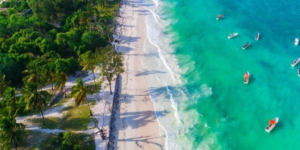
A Zanzibar beach holiday offers far more than sunbathing and swimming. The island’s marine environment is one of the richest and most diverse in the Indian Ocean, and accessing it properly transforms a pleasant holiday into an extraordinary one.
Snorkelling and Scuba Diving
The Mnemba Atoll Marine Conservation Area, just off the northeast coast near Matemwe, is one of East Africa’s finest snorkelling and diving destinations. Its protected coral reef hosts an astonishing density of marine life — lionfish, moray eels, hawksbill sea turtles, spinner dolphins, and vast schools of reef fish in every imaginable colour. Dive sites around the atoll range from gentle reef gardens perfect for beginners to dramatic walls and blue-water drift dives for experienced divers.
For serious divers, Pemba Island — accessible by light aircraft or fast ferry — offers some of the most spectacular diving in the entire Indian Ocean. Pemba’s underwater topography is characterised by dramatic walls that plunge hundreds of metres into the deep, with exceptional coral health and strong current-driven nutrient upwellings that support extraordinary marine biodiversity including hammerhead sharks, manta rays, and schooling barracuda.
Whale Shark Swimming
Between October and March, whale sharks gather in the waters around Zanzibar and Mafia Island, feeding on plankton blooms in the warm Indian Ocean. Swimming alongside these gentle giants — the world’s largest fish, reaching up to 12 metres in length — is one of the most quietly awe-inspiring experiences in all of ocean travel. Responsible whale shark operators follow strict encounter guidelines that prioritise the animals’ wellbeing, and a well-managed swim with a whale shark is entirely safe and profoundly memorable.
Sunset Dhow Cruises
No Zanzibar beach holiday is complete without an evening aboard a traditional wooden dhow — the sailing vessels that have crossed these waters for over a thousand years. Sunset dhow cruises depart from Nungwi, Kendwa, Stone Town, and several other coastal points, typically including fresh seafood, cold drinks, and the experience of watching the Zanzibar sky turn amber, pink, and deep violet as the sun descends into the sea. It is simple, beautiful, and utterly timeless.
Dolphin Swimming at Kizimkazi
At the southern tip of Zanzibar, the village of Kizimkazi is home to resident populations of both bottlenose and Indo-Pacific humpback dolphins that can be encountered year-round. Morning boat trips from the village offer the chance to swim alongside these wild dolphins in their natural habitat — one of Zanzibar’s most joyful and accessible wildlife experiences, and a particularly wonderful addition to any family beach holiday.
Stone Town: The Soul of Zanzibar
No Zanzibar beach holiday should neglect Stone Town — the island’s ancient capital and the source of its deepest cultural identity. A UNESCO World Heritage Site since 2000, Stone Town is a living, breathing city of extraordinary architectural and historical complexity, where Arab, Persian, Indian, African, and European influences have blended over centuries into something entirely unique.
Wandering its labyrinthine alleyways on foot is the only way to truly experience Stone Town — past carved wooden doors of astonishing intricacy (each door traditionally reflecting the wealth and status of the household within), past mosques and Hindu temples standing metres apart, past the crumbling grandeur of the Old Fort and the elegant façade of the House of Wonders, past spice stalls and silver jewellers and coffee vendors and schoolchildren in embroidered kofias.
The Forodhani Night Market on the waterfront is an essential Stone Town experience — an open-air food festival every evening where local vendors serve freshly grilled seafood, Zanzibar pizza (a street-food creation unique to the island), sugarcane juice, and Zanzibari coffee spiced with cardamom and cloves. Eating here as dhow lights twinkle on the harbour and the evening call to prayer echoes across the rooftops is one of those travel moments that stamps itself permanently on your memory.
The Slave Trade History of Zanzibar is also an important and sobering dimension of any Stone Town visit. Zanzibar was the largest slave trading port in East Africa during the 19th century, and the Anglican Cathedral Church — built on the site of the former slave market — and the adjoining underground slave chambers stand as powerful, moving testimonies to one of history’s darkest chapters.
The Spice Island Experience
Zanzibar earned its historic epithet — The Spice Island — through centuries of cultivating and trading cloves, nutmeg, cinnamon, cardamom, vanilla, black pepper, and lemongrass that were once among the most valuable commodities in the world. A spice farm tour through the island’s interior is one of the most sensory-rich and genuinely educational experiences available in Zanzibar.
Walking between the trees, learning to identify spices by touch and smell before seeing them in their natural growing state, and tasting fresh fruits directly from the farm — jackfruit, starfruit, soursop, breadfruit — alongside the inevitable sampling of freshly prepared spice teas is an experience that connects you to the living agricultural identity of the island in a way no museum or history book could replicate.
Best Time for a Zanzibar Beach Holiday
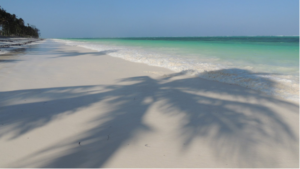
Zanzibar’s climate is tropical and warm year-round, but seasonal patterns significantly affect the beach experience.
- June – October (Cool Dry Season): The finest overall conditions for a Zanzibar beach holiday. Days are warm and sunny with low humidity, seas are calm, and visibility underwater is exceptional. This is peak season — expect higher rates and more visitors, particularly at Nungwi and Kendwa.
- December – February (Hot Dry Season): Excellent beach weather with warm temperatures, light winds, and clear skies. Whale shark season runs through this period. A superb time to visit, particularly for marine activities.
- November and March – April (Transition and Rains): The short rains of November are brief and rarely disrupt holidays significantly. The long rains of March through May bring heavier, more sustained rainfall and are best avoided for beach-focused holidays, though rates are at their lowest and the island is beautifully lush.
Conclusion
A Zanzibar beach holiday occupies a very particular place in the landscape of world travel — it is the kind of experience that satisfies on every level simultaneously, from the purely physical pleasure of warm water and white sand to the intellectual engagement of Stone Town’s history and the sensory delight of its spice-scented markets. Very few places manage to combine natural paradise with cultural depth in quite this way.
Zanzibar rewards every type of traveller. Couples find it effortlessly romantic. Families discover child-friendly marine activities, safe shallow waters, and genuine warmth from local communities. Adventurers find world-class diving, kite surfing, and whale shark encounters. Culture enthusiasts find a UNESCO-listed city of extraordinary complexity and beauty. And those who simply need to rest find beaches so beautiful and peaceful that the world’s urgencies genuinely recede.
Whether you are pairing Zanzibar with a Tanzania safari, combining it with a Kilimanjaro trek, or simply booking it as a standalone island escape, the experience will be richer, more layered, and more lasting than almost any other beach holiday you have ever taken. Zanzibar does not compete with other beach destinations by being more beautiful — though it frequently is. It transcends them by being utterly, irreducibly itself.
Come for the beaches. Stay for everything else. Leave changed.
Key Takeaways
- Zanzibar offers beach variety for every traveller type — Nungwi and Kendwa for all-day swimming and social energy, Paje for kitesurfing, Matemwe for seclusion, and Jambiani for authentic village charm.
- Tidal patterns matter significantly — north coast beaches (Nungwi, Kendwa) retain swimmable water at all tides; east coast beaches experience dramatic tidal withdrawals that can limit swimming for hours daily.
- Mnemba Atoll is East Africa’s finest snorkelling and diving site — protecting remarkable coral reef diversity including sea turtles, dolphins, and hundreds of reef fish species.
- Stone Town is a UNESCO World Heritage Site of genuine historical and architectural complexity — Arab, Persian, Indian, African, and European influences woven into a living city unlike anywhere else in Africa.
- June to October and December to February are the best periods for a Zanzibar beach holiday, offering dry, sunny conditions, calm seas, and excellent underwater visibility.
- Zanzibar pairs perfectly with a Tanzania safari — a 3 to 5 day island extension after a northern circuit safari delivers the ideal balance of wildlife adventure and beach relaxation.
- Marine experiences extend far beyond the reef — whale shark swimming (October–March), sunset dhow cruises, dolphin encounters at Kizimkazi, and world-class diving at Pemba Island all reward deeper exploration.
- Spice farm tours and the Forodhani Night Market are essential cultural experiences that connect visitors to Zanzibar’s living identity as a spice trading crossroads of civilisations.
Frequently Asked Questions (FAQ)
Q: How many days should I spend on a Zanzibar beach holiday?
A: A minimum of 4 to 5 days is needed to experience the beach, Stone Town, and at least one marine activity properly. For a genuinely immersive experience — including time at multiple beaches, a snorkelling or diving excursion to Mnemba Atoll, a spice farm tour, and proper exploration of Stone Town — allow 7 to 10 days. Most travellers pairing Zanzibar with a Tanzania safari allocate 3 to 5 days, which is sufficient for the highlights.
Q: Which beach in Zanzibar is best for families?
A: Nungwi and Kendwa are the top choices for families because they retain swimmable water at all tides, eliminating the frustration of arriving at the beach to find the sea 400 metres away. The calm, shallow water near the shore is safe for young children, and both areas have a good range of family-friendly accommodation, restaurants, and activities including dolphin boat trips and glass-bottom kayaking.
Q: Is Zanzibar safe for tourists?
A: Zanzibar is generally very safe for tourists and is one of Tanzania’s most visited and well-developed tourism destinations. The island has a well-established hospitality industry and local communities with a long tradition of welcoming international visitors. Standard travel precautions apply — avoid displaying valuables openly, use licensed taxis at night, and be respectful of local Islamic customs, particularly in Stone Town and rural villages. Modest dress is appropriate when away from the beach.
Q: Do I need a visa for Zanzibar?
A: Zanzibar is part of Tanzania, so the same visa arrangements apply. Most nationalities can obtain a Tanzania e-visa online before travel through the official Tanzania Immigration portal. If you already have a Tanzania mainland visa and are travelling to Zanzibar by domestic flight or ferry, no additional visa is required. Confirm requirements for your specific nationality at least 3 weeks before travel.
Q: What is the best way to get to Zanzibar?
A: The fastest and most convenient option is a direct flight into Zanzibar Abeid Amani Karume International Airport (ZNZ), which receives direct international flights from Nairobi, Addis Ababa, Doha, and several European cities, as well as frequent domestic connections from Dar es Salaam and Kilimanjaro. Alternatively, a high-speed ferry from Dar es Salaam takes approximately 1.5 to 2 hours and is a scenic and affordable option for travellers already on the mainland.
Q: What currency is used in Zanzibar and can I use US dollars?
A: The official currency is the Tanzanian Shilling (TZS), but US dollars are widely accepted in tourist-facing businesses, hotels, restaurants, and activity operators across Zanzibar. Carry clean, undamaged notes printed after 2006, as older bills are commonly refused. Small denomination TZS notes are useful for local markets, street food, and tips. ATMs are available in Stone Town and Nungwi but can be unreliable — carry sufficient cash as backup.
Q: Is Zanzibar suitable for a honeymoon or romantic trip?
A: Zanzibar is one of the Indian Ocean’s premier honeymoon destinations and consistently ranks among the world’s most romantic island getaways. Its combination of extraordinary natural beauty, intimate boutique hotels and private villas, world-class dining on the beach, sunset dhow cruises, and the unique atmospheric richness of Stone Town creates conditions for genuine romance that more generic beach resorts simply cannot replicate. Kendwa and Matemwe are particularly well-suited for couples seeking privacy and intimacy.
Q: Can I combine a Zanzibar beach holiday with a Tanzania safari?
A: Not only can you — it is one of the most popular and rewarding travel combinations in Africa. A Tanzania safari followed by a Zanzibar beach extension delivers a perfect physical and emotional counterpoint: the energy, movement, and wildlife intensity of the safari gives way to the stillness, warmth, and sensory pleasure of the island. The two experiences complement each other beautifully. Most travellers allocate 7 to 10 days for the safari circuit and 3 to 5 days for Zanzibar. Both Zanzibar’s airport and Stone Town’s ferry terminal connect easily to the mainland safari circuit via domestic flights.
Q: What should I pack for a Zanzibar beach holiday?
A: Pack light, breathable clothing in natural fabrics — linen and cotton handle the tropical humidity far better than synthetics. Essentials include high-SPF reef-safe sunscreen (both for your skin and the coral ecosystem), a lightweight cover-up or scarf for Stone Town visits (modest dress is expected away from beach areas), quality snorkelling equipment if you have your own, reef-safe insect repellent, and a dry bag for water activities. A modest wardrobe of loose-fitting clothing that covers shoulders and knees is respectful and practical for cultural excursions.
Zanzibar is closer than you think, and more extraordinary than you imagined. Your Indian Ocean escape begins the moment you decide you deserve it.
